
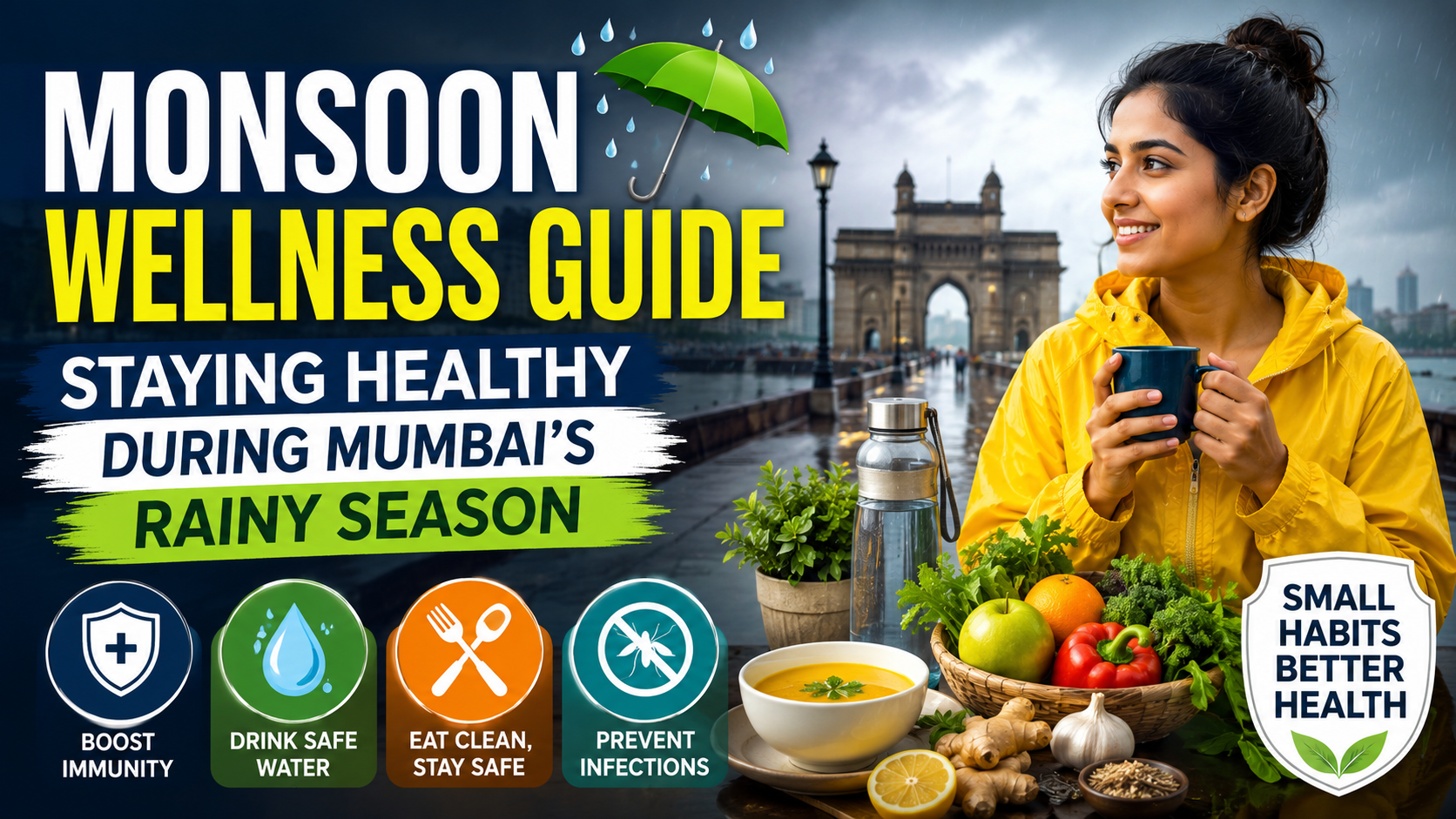
Staying Healthy During Mumbai’s Rainy Season
By a Healthcare Expert
There is something undeniably beautiful about the Mumbai monsoon. The first showers bring relief from the summer heat, the city turns greener, and a hot cup of tea suddenly feels even more comforting. Yet, while the rains refresh the environment, they also create ideal conditions for infections, seasonal illnesses, and lifestyle-related health issues.
Every year, hospitals and clinics across Mumbai witness a rise in cases of viral fever, influenza, dengue, malaria, leptospirosis, food poisoning, and respiratory infections. The good news is that many of these illnesses can be prevented with a few simple yet consistent habits.
Good health during the monsoon is not about taking medicines after falling sick—it is about preparing your body before illness strikes.
Why Does the Monsoon Affect Our Health?
The rainy season creates an environment where bacteria, viruses, fungi, and mosquitoes thrive. Increased humidity slows the drying of clothes and footwear, stagnant water becomes a breeding ground for mosquitoes, and fluctuating temperatures can temporarily weaken the body’s natural defense mechanisms.
Many people also tend to eat more street food during the rains, drink less water because they don’t feel thirsty, and exercise less due to the weather. Together, these factors increase the risk of seasonal illnesses.
Strengthening Your Immunity Naturally
A strong immune system is your first line of defense.
Instead of relying solely on supplements, focus on maintaining a balanced diet rich in seasonal fruits, vegetables, whole grains, pulses, nuts, and protein-rich foods. Foods rich in Vitamin C, zinc, and antioxidants help support immune function.
Warm homemade meals are generally preferable during the rainy season. Freshly prepared soups, dals, steamed vegetables, and home-cooked meals are safer than food that has been exposed to moisture or contamination.
Adequate sleep is equally important. Adults should aim for seven to eight hours of quality sleep every night, as poor sleep weakens immune function and delays recovery from infections.
Safe Drinking Water Matters
One of the most common causes of monsoon illnesses is contaminated drinking water.
Always drink filtered, boiled, or purified water, especially during periods of heavy rainfall when water contamination becomes more likely. Carry your own water bottle whenever possible and avoid drinking water from unknown sources.
Dehydration can still occur during the rainy season even if you don’t feel excessively thirsty. Drinking sufficient water throughout the day helps maintain normal body functions and supports overall health.
Be Careful About What You Eat
The temptation to enjoy roadside snacks during the rains is understandable, but food hygiene becomes especially important during this season.
Whenever possible:
- Eat freshly cooked food.
- Avoid stale or reheated meals.
- Wash fruits and vegetables thoroughly.
- Avoid cut fruits sold in the open.
- Be cautious with uncooked salads if you’re unsure about hygiene.
- Choose clean restaurants that maintain good food safety standards.
Simple precautions can significantly reduce the risk of food-borne infections.
Protect Yourself from Mosquito-Borne Diseases
Mumbai experiences a rise in mosquito-borne illnesses during the monsoon.
Preventive measures include:
- Do not allow water to collect in flower pots, buckets, coolers, or discarded containers.
- Use mosquito repellents when required.
- Wear full-sleeved clothing, especially during early morning and evening hours.
- Install window screens wherever possible.
- Keep your surroundings clean and dry.
If you develop high fever, severe body pain, unusual fatigue, persistent headache, or bleeding symptoms, seek medical attention promptly rather than self-medicating.
Don’t Ignore Respiratory Health
Humidity and sudden temperature changes can aggravate allergies, asthma, sinusitis, and respiratory infections.
People with chronic respiratory conditions should continue their prescribed medications regularly and avoid exposure to damp environments.
If you experience persistent cough, breathlessness, wheezing, or fever lasting more than two to three days, consult your doctor instead of delaying treatment.
Foot Care Is Often Overlooked
Walking through waterlogged streets is sometimes unavoidable in Mumbai.
However, prolonged exposure to dirty water increases the risk of fungal infections and skin diseases.
After returning home:
- Wash your feet thoroughly with clean water.
- Dry them completely, especially between the toes.
- Change wet socks immediately.
- Wear dry, comfortable footwear.
- Avoid remaining in wet shoes for long periods.
Individuals with diabetes should be particularly careful, as even small foot injuries can lead to serious complications if neglected.
Continue Physical Activity
Many people stop exercising during the rainy season.
While outdoor activities may become difficult, regular physical activity remains essential for maintaining immunity, heart health, and mental well-being.
Indoor options such as yoga, stretching, strength training, walking inside large indoor spaces, or home workouts can help maintain fitness even during heavy rains.
Just thirty minutes of moderate activity on most days can make a meaningful difference.
Mental Well-being Matters Too
Grey skies and reduced sunlight can affect mood, energy levels, and motivation in some individuals.
Maintaining a regular routine, spending time with family, engaging in hobbies, reading, meditation, and moderate exercise can all support emotional well-being during the rainy season.
If you notice persistent sadness, anxiety, or loss of interest in daily activities, don’t hesitate to seek professional guidance.
Mental health deserves the same attention as physical health.
When Should You Visit a Doctor?
While many viral infections resolve with rest and hydration, certain symptoms should never be ignored.
Consult a healthcare professional if you experience:
- Fever lasting more than two to three days
- High fever with chills
- Difficulty breathing
- Severe vomiting or diarrhea
- Persistent abdominal pain
- Skin rashes with fever
- Unusual bleeding or bruising
- Extreme weakness or dehydration
Early diagnosis often leads to faster recovery and helps prevent complications.
A Healthy Monsoon Begins with Small Daily Habits
The rainy season is meant to be enjoyed—not feared.
Simple habits such as eating fresh food, drinking safe water, maintaining personal hygiene, exercising regularly, sleeping well, and seeking timely medical advice can significantly reduce the risk of seasonal illnesses.
Health is rarely protected by one big decision. It is built through small choices repeated every day.
This monsoon, enjoy the rains, savour the season, and take the precautions that allow you and your family to remain healthy, active, and safe throughout Mumbai’s beautiful yet challenging rainy months.


