
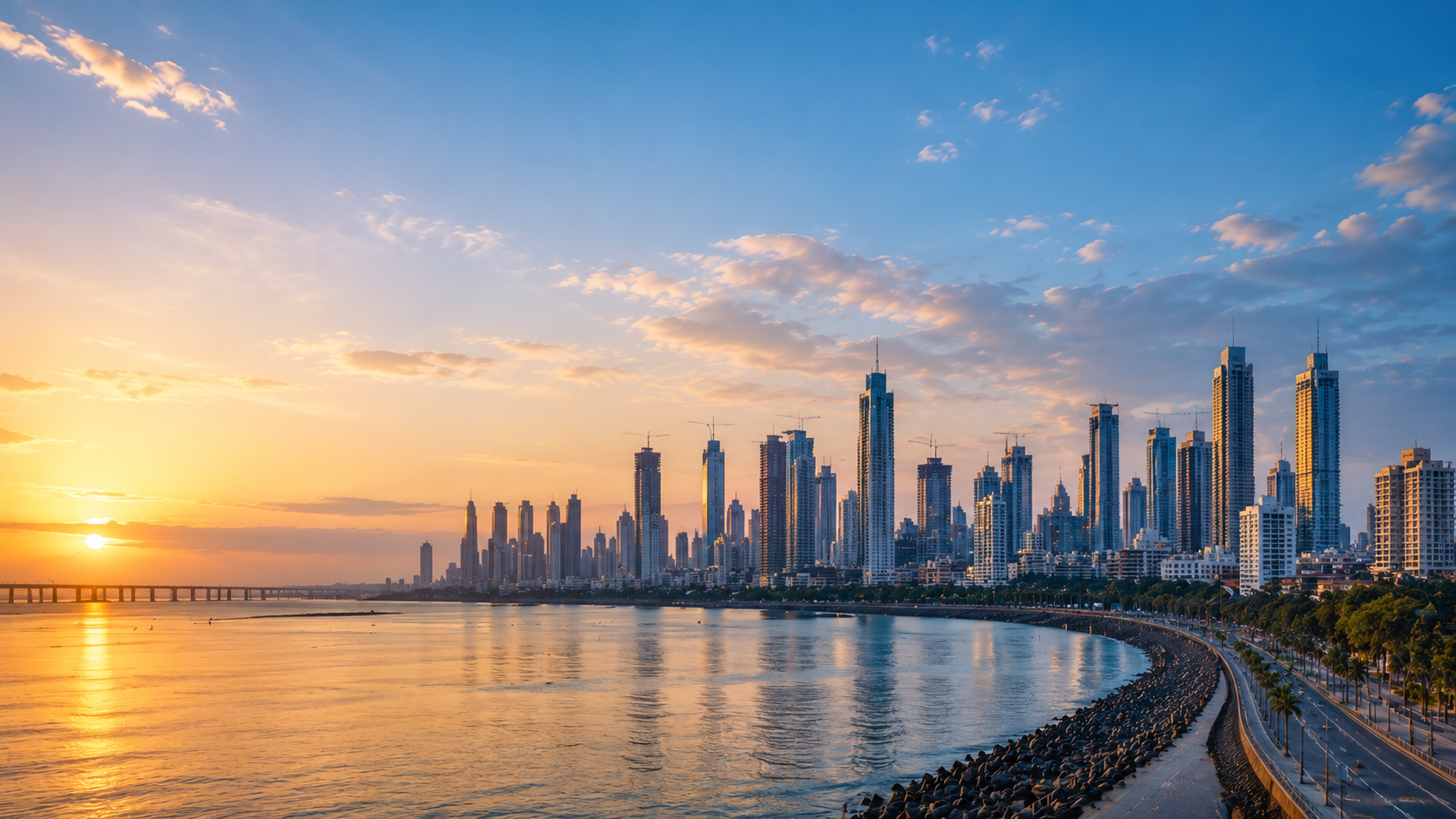
Infrastructure Doesn’t Create Cities. People Do.
For years, Mumbai buyers have been chasing one magic word—connectivity.
Every new project brochure promises it.
Five minutes to the Metro.
Ten minutes to the airport.
Twenty minutes to BKC.
Developers proudly display colourful maps where every destination appears just around the corner. Buyers feel reassured. Faster travel certainly improves daily life.
But let me ask a simple question.
When did we begin buying a home only because a road was being built nearby?
Infrastructure is important. Nobody can deny that.
However, somewhere along the way, we started believing that every new bridge, Metro line or highway automatically guarantees a better investment. That assumption deserves a second thought.
Take a drive through Mumbai today.
The city is under construction almost everywhere. Metro pillars rise above busy junctions. Flyovers are being extended. Coastal roads are changing travel patterns. Redevelopment projects have become a part of everyday conversation.
There is genuine optimism, and rightly so.
The city is preparing itself for the future.
But cities don’t change merely because concrete is poured. They change because people decide to live, work and build communities there.
That difference often gets overlooked.
Many homebuyers today evaluate a property almost like a transport planner.
How close is the station?
How many minutes to work?
Which Metro line will open next year?
How much will prices increase after possession?
All fair questions.
Yet surprisingly few ask another question.
Will I enjoy living here ten years from now?
That question has no mathematical answer, but it probably matters the most.
A neighbourhood isn’t defined only by infrastructure.
It is defined by the people who occupy it.
Schools that parents trust.
Local shops where people know your name.
Parks where children actually play.
Neighbours who become friends rather than strangers sharing an elevator.
These things never appear in project brochures, yet they often determine whether a place truly feels like home.
I’ve seen buyers reject a well-established neighbourhood because a newly launched township promised higher appreciation.
A few years later, the appreciation happened—but the lifestyle never did.
The buildings were beautiful.
The roads were wide.
Yet the community took years to develop.
Buying property is not only about investing in square feet.
It is also investing in an environment.
That environment cannot be constructed overnight.
Another interesting trend is how infrastructure influences expectations.
Whenever a new Metro line is announced, surrounding property prices begin moving almost immediately.
Not because trains have started operating.
Not because commuting has improved.
Simply because people expect prices to rise in the future.
Expectations are powerful.
Sometimes more powerful than reality itself.
Markets have always behaved this way.
The danger begins when expectations replace independent thinking.
Just because everyone believes a location will become valuable doesn’t automatically make it the right choice for every buyer.
Real estate has never been one-size-fits-all.
The young professional looking for convenience, the growing family seeking stability and the retired couple searching for peace are all buying homes for completely different reasons.
Yet today many buyers end up chasing the same locations.
Why?
Because that’s where everyone else seems to be looking.
There is comfort in following the crowd.
Unfortunately, the crowd doesn’t always make the best investment decisions.
History has shown us that repeatedly.
One more aspect deserves attention.
Infrastructure improves accessibility.
It doesn’t improve maintenance.
It doesn’t create responsible housing societies.
It doesn’t guarantee better neighbours.
It doesn’t ensure peaceful weekends.
These are things that develop through people, not projects.
And people remain the most important part of real estate.
Sometimes we become so fascinated by what’s coming tomorrow that we ignore what already exists today.
A mature neighbourhood with dependable civic amenities may offer far greater quality of life than an ambitious project waiting for future infrastructure to unlock its potential.
Both have value.
The key is knowing which one suits your purpose.
There is another misconception that deserves correction.
Every infrastructure project is viewed as an investment opportunity.
Rarely do we discuss it as a lifestyle opportunity.
Those are two different conversations.
If you’re buying purely as an investor, future connectivity certainly matters.
If you’re buying a home for your family, infrastructure should support your decision—not become the decision itself.
That distinction is often forgotten.
Real estate rewards patience.
Infrastructure rewards cities.
But happiness inside a home comes from choices that go far beyond roads and railway lines.
Perhaps that is why the smartest homebuyers I’ve met over the years don’t ask only where the next Metro station will come up.
They ask a much simpler question.
“Can I see myself living here?”
Everything else comes later.